How to Make a Simple Monthly Budget for 2027 (Step by Step)
2026-10-31 · Pawsome Nordic
A budget isn't about saying no to everything. It's simply a plan for where your money goes each month – so you decide, instead of wondering at the end of the month where it all went. Here is a simple method you can set up in one evening and keep up all year.
Step 1: Write down your monthly income
Start with what actually lands in your account each month after tax: salary, student grants and loans, child benefit, side income. If your income varies, use a careful (low) average of the last three to six months.
Step 2: List your fixed costs
These are the costs that are about the same every month:
- Rent or mortgage, electricity, home insurance
- Phone, internet and streaming subscriptions
- Transport pass or car costs, loan repayments
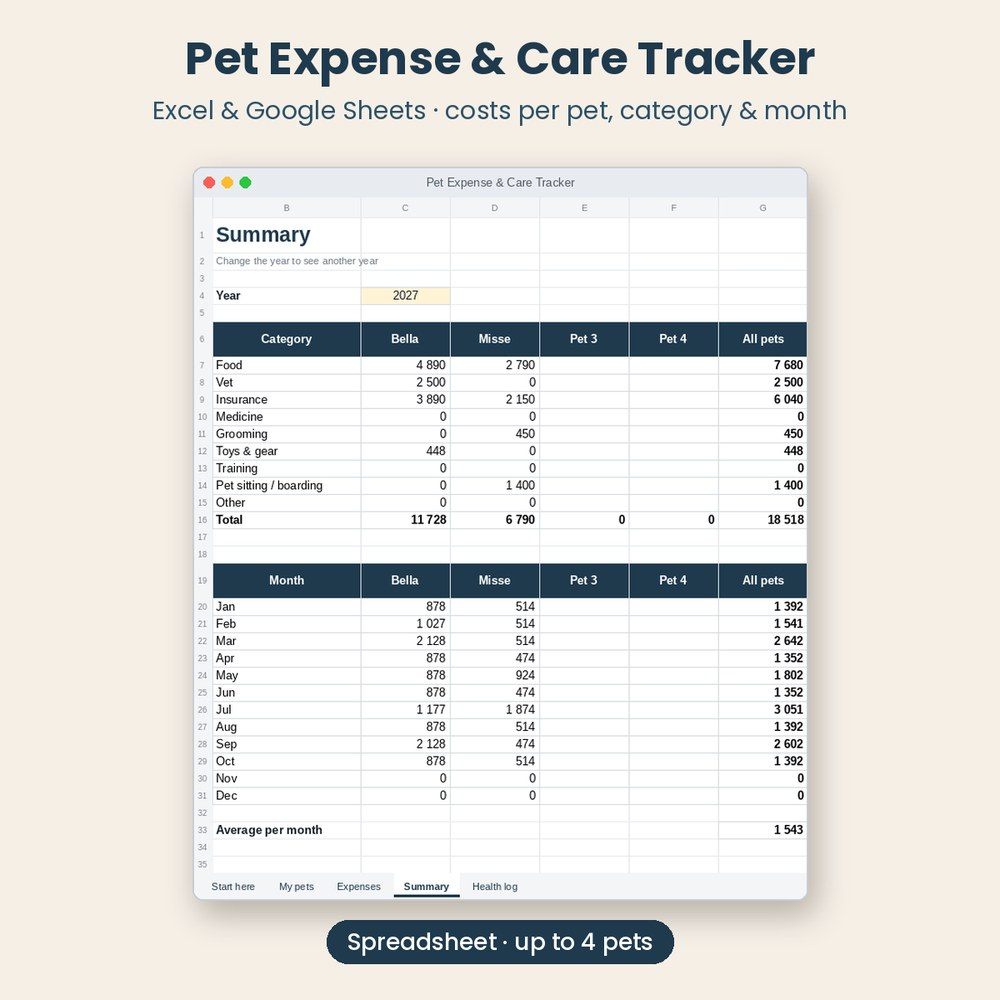
- Pet insurance and other regular pet costs
Tip: go through last month's bank statement line by line. Most people find at least one subscription they forgot about.
Step 3: Estimate your variable costs
Food, eating out, clothes, hobbies, gifts and fun. These change from month to month, so look at the last two or three months and take an honest average. Don't forget costs that come once or twice a year – car service, glasses, birthday and Christmas gifts. Divide them by 12 and set that amount aside every month.
Step 4: Decide on savings – before you spend
Choose an amount to save and treat it like a fixed cost. Many people move it to a separate savings account on payday, so it's gone before it can be spent. Even a small amount every month builds a habit.
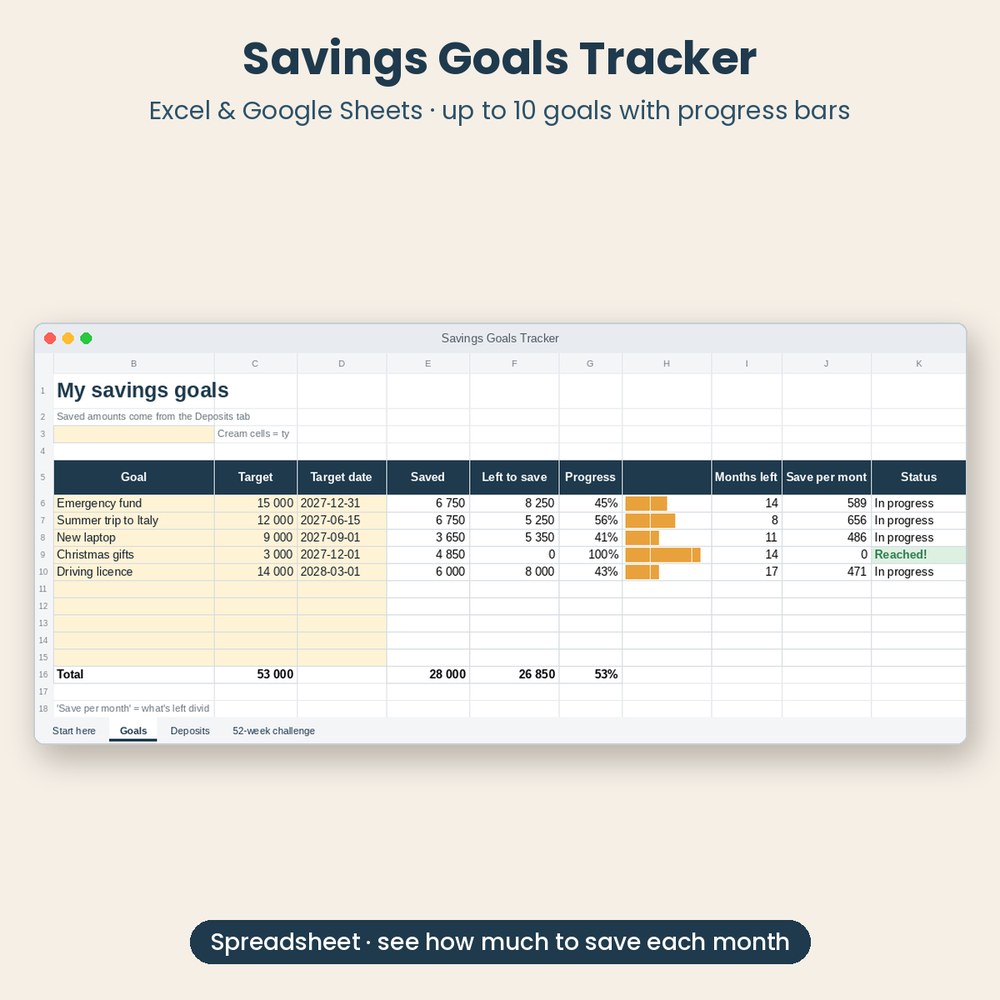
It helps to save towards something specific: a buffer for unexpected costs, a trip, a new laptop. A goal with a number and a date ("8,000 kr by June") is much easier to stick to than "save more".
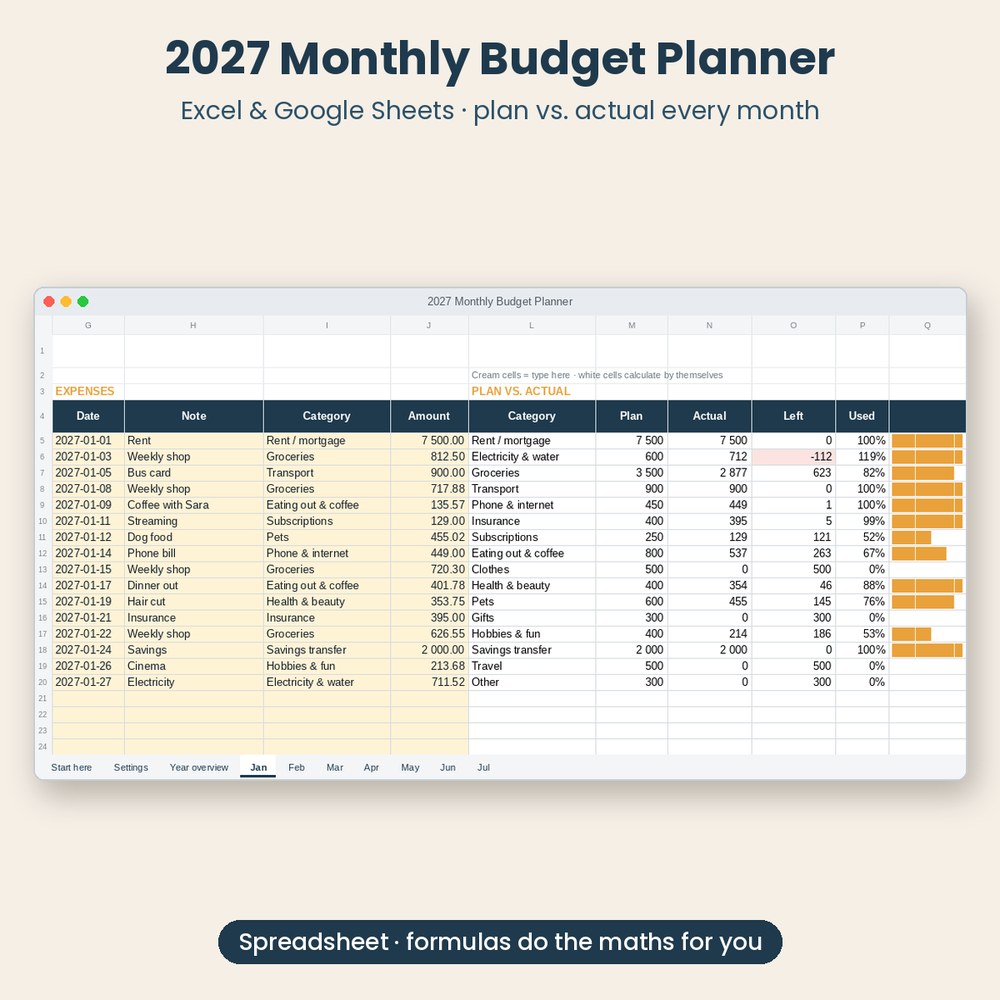
Step 5: Plan vs. actual
At the start of the month, write down your planned amount for each category. During the month, note what you actually spent. The difference is where the learning happens: maybe food is always 800 kr over plan – then either adjust the plan or find a way to change the habit.
Step 6: A 15-minute check-in once a month
- What went over? What went under?
- Were there any surprises I should plan for next time?
- How close am I to my savings goal?
That's it. You don't need to track every krona forever – the monthly check-in is what keeps the budget alive.
Paper, app or spreadsheet?
Any of them works if you actually use it. A spreadsheet has one big advantage: it does the maths for you, so totals, differences and a year overview update by themselves.
Our 2027 Monthly Budget Planner works in Excel, Google Sheets and Numbers, with plan vs. actual for every month and a year overview. Saving for something specific? Try the Savings Goals Tracker.